

Last month, the New York Times released an article that perfectly summarized the frenzied conversation taking shape around AI and its impact on hiring. The Times article leans heavily on the concept of a job ladder and paints a clear picture of the AI “monster”, chomping its way upwards by eating all the jobs on the lowest rung first.
While that image is simple, powerful, and seems to reflect how most people are approaching the integration of AI into their hiring strategies, it is also deeply misleading.
First of all, and let me say this again, AI is not Jaws. It is not a monstrous creature intent on the indiscriminate consumption of all jobs, starting with the most junior. Framing the conversation around the job ladder shapes our thinking into a vertical framework and discourages a broad perspective.
If anything, AI is not eating the job ladder, it is blocking the pipeline.
Of course, I am not the first person to raise this flag but even truly insightful thought leaders, such as Laszlo Bock seem to be so locked into the ladder metaphor that the only talk of pipelines is on the future supply of leadership and management. His June 23rd, 2025 LinkedIn post sharing his slides on the topic specifically calls out “a shortage in capable line managers in 5-7 years” (slide 35 – emphasis mine).
Yes. Agreed. And…
This perspective overlooks all of the senior individual contributors (ICs) that make up the backbone of professions ranging from software engineering to accounting or journalism. I first started worrying about the pipeline of senior ICs after hearing a quote on the Hard Fork podcast back in February:
“I’ve met founders who tell me that they are no longer needing to hire junior software engineers because now a senior engineer with an AI tool can do much more work, work that might have previously required three or four people under them to do.”
What I have been waiting for ever since is the conversation around where those senior engineers come from. It appears to me that the tech industry is fixated on the word “under” at the end of that sentence and immediately imagining that all of those senior engineers are managers. That is a false equivalency. Most of the time, those senior engineers are outside (and loudly, proudly outside) the management chain. A similar dynamic arises in many other fields, accounting and journalism simply being a few of the more broadly understood examples.
So yes, we will be lacking in managers in a few years but we are also barreling towards a world in which we are also short of experienced individual contributors that those companies want them to manage.
Speaking of “senior engineers”, the notion that our current understanding of “seniority” is going to remain intact after more people have determined how best to integrate AI capabilities into their fields seems highly naive. We seem to be approaching a shift comparable to the industrial or knowledge revolutions that vastly expanded our notions of what it means to “work” – and did so in very different ways. I can only assume that the landscape will be even broader in the future and that seniority will also look very different in 5, 10, or 25 years.
As I have socialized the ideas in this article in one on one conversations over the last few weeks, I have had several people, including Itamar Goldminz, point out that most of the people making these decisions happen to be in the most powerful positions defined under the current model. Said differently, if you are at the top of the pyramid or sitting on a top rung of the ladder, you are highly motivated to maintain the ladder. It has gotten you where you are and is currently holding you aloft.
Unfortunately for you, ladders (and really all variations on organizational structures) were built for humans and as the recent spate of papers released by Apple and Stanford has been driving home, AI is simply not human. That may feel like a truth too obvious to require stating but building your entire staffing strategy around the assumption that AI agents can completely replace your most junior employees sure looks an awful lot like pretending that AI is, in fact, human.
In the spirit of transparency, I should probably note here that I have no idea what seniority is going to look like in 5 to 10 years. I am curious to learn how incorporating AI will impact the ways we think about jobs, seniority, and what it means to work. One thing I am pretty sure about, however, is that if you are counting on having “senior” people in your organization in a few years, you want the people who are entering the workforce now to have been building experience of some form during that time. Blanket cuts to junior staff today seem perfectly positioned to actually be the rug coming out from under your job ladder in the future. (If you have read far enough to get to this tortured metaphor, my thanks – and apologies.)
Finally, who actually thinks that cutting the newest graduates out of their businesses in the face of a technological revolution is a good idea? When you have trouble with your phone, I don’t care how old you are, you are going to default to asking the nearest teenager over the nearest octagenarian. As someone whose octagenarian grandfather is still on the cutting edge of chip design, I know darned well “old” people can be very, very good with tech.
Chimamanda Ngozi Adichie reminds us that “the problem with stereotypes is not that they are untrue, but that they are incomplete.” Closing your organization off to junior employees who are well positioned to adapt to changing technology and integrate the latest tools into their daily tasks hardly seems like a forward thinking strategy.
But when the Job-Eating-AI-Monster-Shark is busy chomping its way up the job ladder you are perched atop, the youngsters at the bottom probably seem like a reasonable tribute.
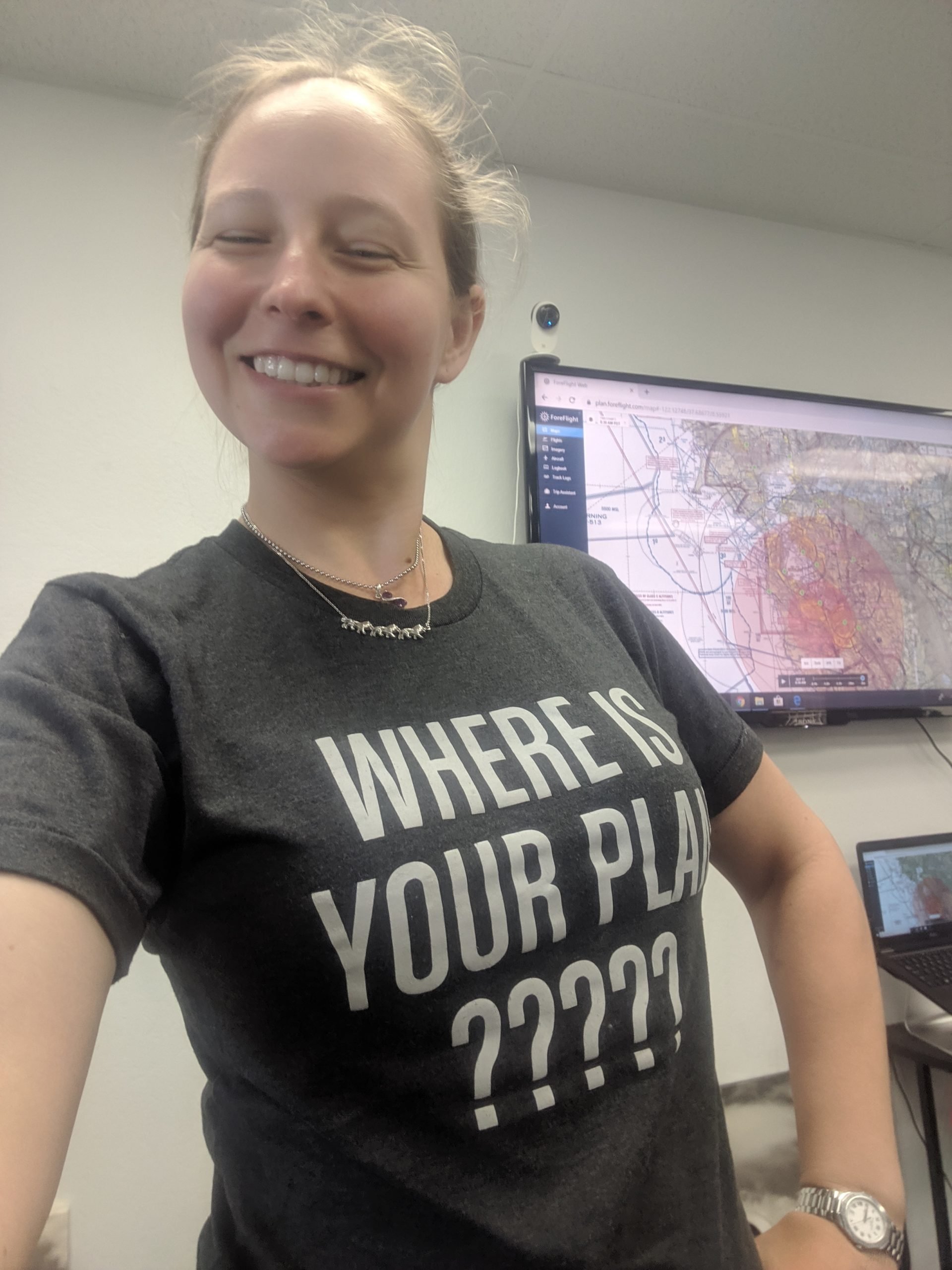
There are so many more areas I could dive into (the entire notion that bottom-up reductions in force are most effective under any circumstances, for example, with a shout out to Daria Wagganer whose own work has proven the fallacy of the approach) but I will cut myself off here for now and end with a story that explains the image way back up at the top of the page.
In 2018, I made tee shirts for myself and my colleagues that said, “WHERE IS YOUR PLAN????” on the front. The phrase had become a bit of a running joke in our leadership team meetings but the reality was that it was a valid question we were too rarely able to answer. Our shirts served as a valuable reminder that great ideas were necessary but they were also insufficient for success.
I have been thinking about those tee shirts a lot over the past few weeks as I have watched the media explosion happening over the impact AI is having on the job market. As companies and thought leaders alike boast about the immediate actions they are taking in response to AI and voice their concerns for the future, there is something consistently missing. There are no clear, long term plans that explain how anyone is going to create their Team of the Future based on their Decisions of Today.
So this month’s article is my plea to leaders in 2025 to really think through their AI-driven decisions and ensure that you can see at least one clear path from today’s actions to tomorrow’s needs – through 2030 and beyond.
Oh, and if you happen to want some help in building that plan, let’s chat.
 Previous
